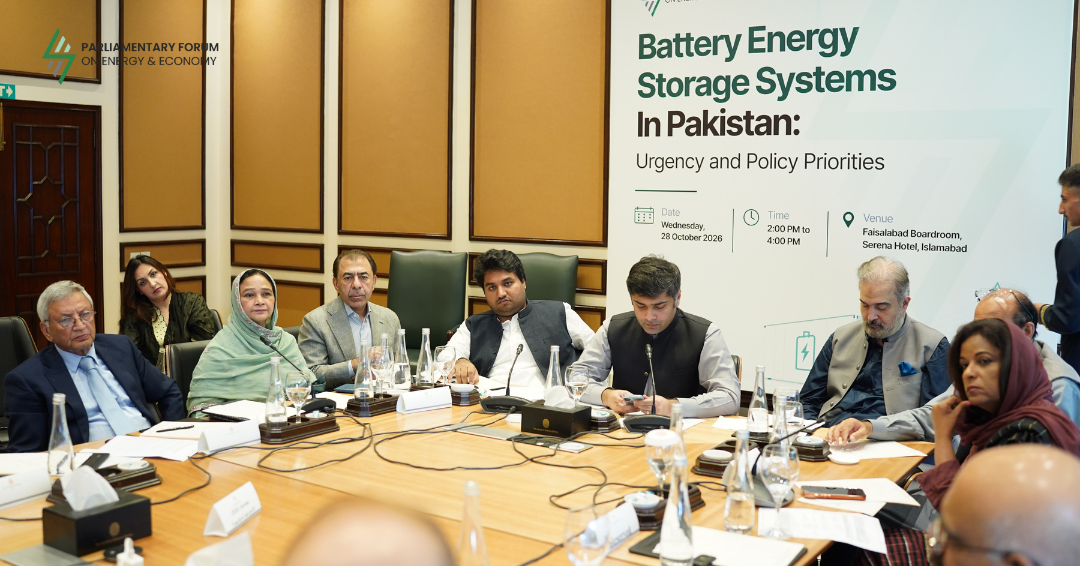
Date: 28 October 2026
A Dialogue on Battery Energy Storage Systems in Pakistan: Urgency and Policy Priorities
Location: Faisalabad Boardroom, Serena Hotel, Islamabad
Pakistan’s rapid solarisation across domestic, commercial, industrial, and agricultural sectors is transforming its energy landscape, creating opportunities to reduce electricity costs and dependence on imported fuels. However, it also poses challenges for grid stability, managing evening peak demand, reverse power flow, and the financial sustainability of the power sector.
Battery Energy Storage Systems (BESS), both at the grid level as well as the local level for localized storage, can help address this challenge of surplus solar electricity by storing it for use during peak demand, reducing reverse flow, absorbing excess generation at the grid level, and facilitating greater integration of renewable energy. However, high upfront costs, taxation, regulatory gaps and limited domestic manufacturing capacity constrain their deployment.
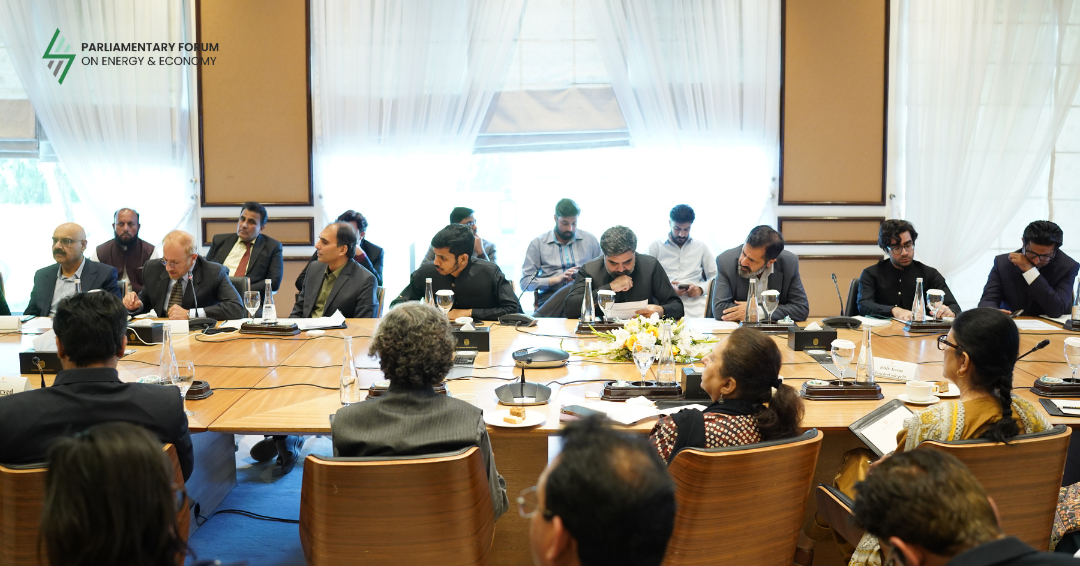
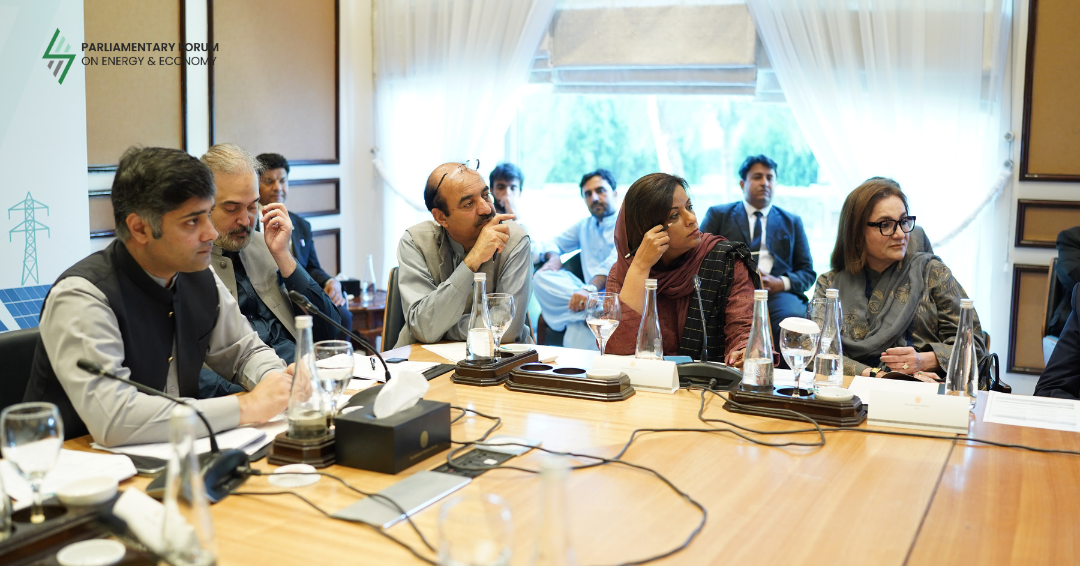
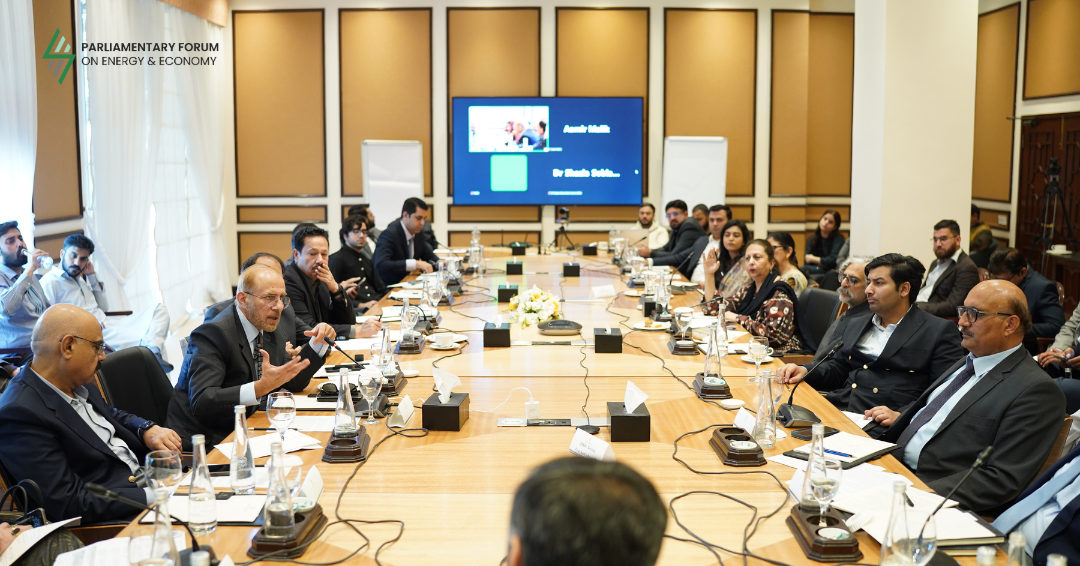
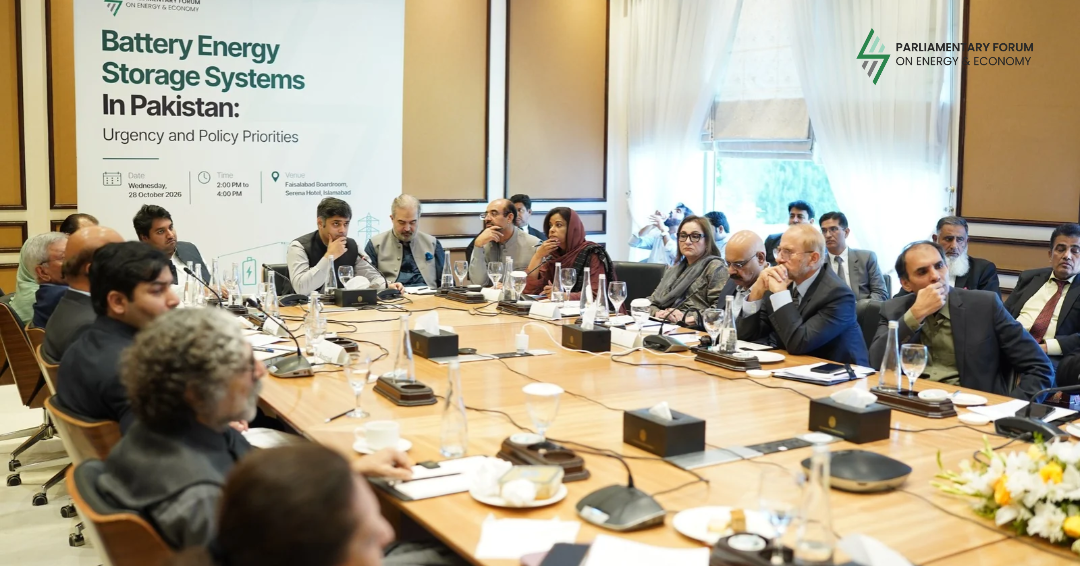
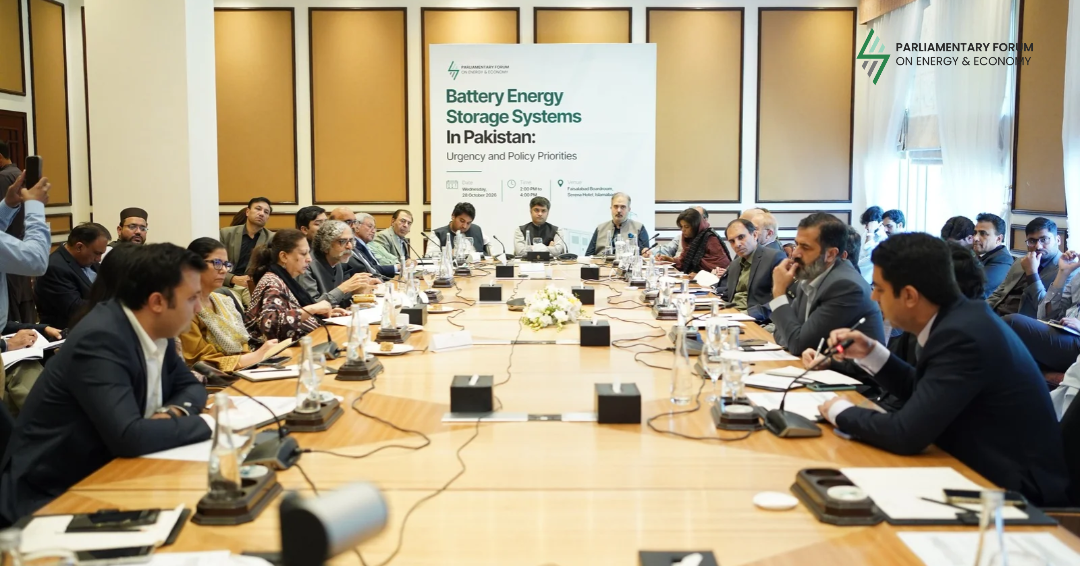
In view of the rapid expansion of solar energy and the growing need for storage solutions, the Parliamentary Forum on Energy & Economy organised a parliamentary dialogue to examine the urgency of scaling up utility-scale BESS in Pakistan and identify key policy priorities. The discussion focused on developing a coherent regulatory framework, rationalising taxes and customs duties on storage equipment, accelerating grid-scale and distributed storage deployment, highlighting the immediate requirement of a need assessment of the battery storage in each DISCO’s service area, facilitating investment, and promoting domestic manufacturing, testing infrastructure and battery recycling. The feasibility of mandating a minimum of four hours of storage capacity for new large-scale solar and wind projects exceeding 100 MW will also be discussed in the session.
The dialogue brought parliamentarians and relevant stakeholders together to develop actionable policy recommendations for the government and regulators, positioning energy storage as a key component of Pakistan’s energy security, grid modernisation and affordable energy transition.